

Peak Heatwave Rewilding at Downicary
A scorching, bone-dry summer isn't exactly rewilding's dream weather. Yet at Downicary, nature seems determined to prove it doesn't need perfect conditions, just a chance.
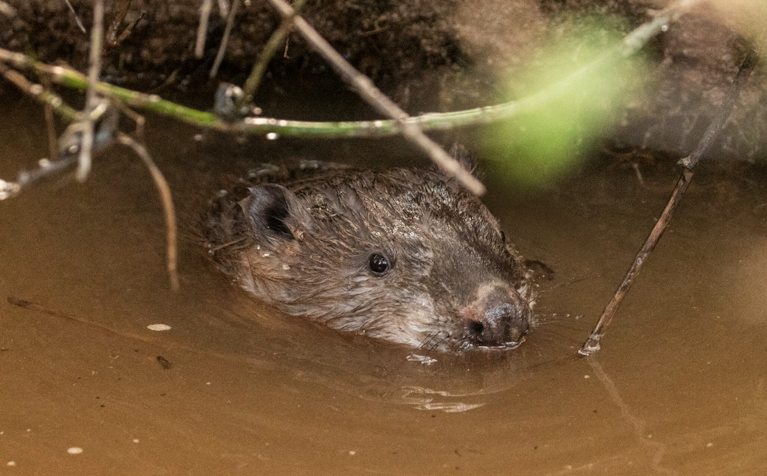
At the height of this summer's drought, Bowyers Wood told a remarkable story. While streams shrank to trickles and woodland plants wilted, the beavers did exactly what they evolved to do: keeping water in the landscape and creating new life in the process.
Looking back, there was something unsettling about Bowyers Wood this summer. The familiar soundtrack of flowing water had been replaced by an occasional trickle, and the broad leaves of butterbur, usually lush and glossy by late summer, hung limp against the banks. After two months without meaningful rain, the woodland was showing the strain of one of the driest summers in recent memory. Across much of the UK, streams had shrunk, ponds had disappeared and wildlife had been forced to adapt to an increasingly harsh landscape.
Yet hidden within this woodland in East Sussex was a very different story. When Chris Packham returned to Bowyers Wood with Grace at the height of the drought, it became an unexpected test of one of Britain's most remarkable rewilding projects, and the results were impossible to ignore.
Drought? Not here.
The stream entering the beaver enclosure had dwindled to almost nothing, but inside it, water was everywhere. Pools were still full, channels were still flowing and wetlands that might otherwise have dried out were alive with insects, fish and amphibians. While the woodland around them thirsted, the beavers had quietly been storing water, which is exactly what they were designed to do.
Beavers are often called nature's engineers, but watching them work during a drought showed just how profound that engineering can be. Their dams slow water as it moves through the landscape, letting it spread into the surrounding woodland instead of racing downstream. It soaks into the soil, tops up groundwater and lingers for weeks or months longer than it otherwise would.
Standing beside a bridge that almost touched the water's surface, Chris reflected on the irony. In winter, this area regularly flooded after heavy rain. Now, after weeks of dry weather, the water here was higher than it had ever been in summer. Without the beavers, this stretch of stream could easily have been dry.
That stored water was more than just a pond. It was a refuge. Dragonfly larvae kept developing beneath the surface, aquatic insects still had somewhere to live and fish that might have been stranded had survived. In the middle of a drought, an entire freshwater ecosystem was carrying on because the landscape was holding onto water instead of losing it.
Messy in the best way
The transformation at Bowyers Wood reaches far beyond the water itself. Deeper into the enclosure, the woodland suddenly opened up. Dense stands of hazel had been felled and coppiced, creating a patchwork of sunny glades linked by narrow corridors of light. What was once an almost impenetrable thicket is becoming a mosaic of habitats, shaped tree by tree, night after night, by busy beavers.
To human eyes it looked chaotic, with branches scattered across the woodland floor, sharpened stumps jutting from the ground and fresh chew marks glowing pale against dark bark. Yet every fallen stem was creating opportunity.
For years, much of the woodland floor had sat in shade beneath a thick hazel canopy. Now sunlight was reaching the soil for the first time in decades, and dormant seedbanks had a chance to wake. Chris imagined carpets of bluebells, primroses and wild garlic next spring, in places where they've been absent for years. It's destruction only if you look at the trees. Look at the woodland, and it's creation.
Dead wood, very much alive
Even the trees that won't survive have an important future ahead of them. One hazel had been ring-barked completely, which means it will eventually die while still standing. Chris pointed out a fact that often surprises people: around a third of the wildlife associated with a tree depends on it after it dies. Standing dead wood becomes home to fungi, beetles, lichens, birds and bats, turning what looks like loss into one of the richest habitats in a woodland. In nature, death is rarely an ending. More often, it's the beginning of something else.
Beavers on the move
The drought also revealed just how quickly the beaver family is reshaping its territory. Grace had discovered brand new feeding stations scattered across the enclosure: carefully stocked piles of branches where the beavers store food before stripping off the bark. Camera traps showed the animals resting on these platforms during the day, surrounded by shredded bark and soft bedding made from vegetation.
The younger beavers seemed to have dispersed too, exploring new corners of the woodland and setting up feeding areas far beyond the family's original lodge. Places that were too dry for them only months ago were now wet enough to use, which shows how dramatically the landscape has changed beneath their paws.
Caught in broad daylight
Then came the moment everyone had been hoping for. After weeks of carefully moving camera traps through the enclosure, Grace captured the clearest images Bowyers Wood has ever recorded of the beavers out in the open in daylight. Instead of silhouettes slipping through water at dusk, the cameras revealed every detail: enormous webbed hind feet, powerful orange incisors and thick, waterproof coats as the animals hauled branches through brambles with astonishing determination.
One sequence follows a beaver wrestling a branch several times its own size through tangled undergrowth. It pulls, reverses, twists and tries again, never giving up even as the branch snags on thorny stems. Watching the animal solve the problem in real time feels less like instinct and more like engineering.
Bark for tea
The cameras captured something even rarer than engineering. On one feeding platform, the whole family gathered together in daylight. Mum and dad sat side by side, sharing the same log while calmly stripping bark for a meal, and the young kit arrived moments later, clambering between them before enthusiastically grooming its parents.
It was an intimate glimpse into family life that few people ever get to see in the wild: gentle, affectionate and unexpectedly funny. For Chris, it was some of the most remarkable behaviour the project has recorded so far.
A goshawk gatecrashes
Just when it seemed the beavers had stolen the show, the cameras revealed something completely unexpected. Reviewing the footage, Grace spotted a bird that instantly stopped Chris in his tracks. Perched on a hay bale inside the enclosure, bathed in daylight, was a goshawk, one of Britain's most elusive woodland predators. Minutes earlier, the same camera had recorded a buzzard using exactly the same perch.
To capture a goshawk so clearly was extraordinary. Chris jokingly declared it the "Oscar of camera trapping", a step beyond even the remarkable beaver footage. The piercing eyes, barred chest and unmistakable silhouette leave little doubt why the species is considered one of Britain's most formidable hunters.
It wasn't alone, either. Multiple buzzards, each with strikingly different plumage, also appeared on the cameras, alongside a growing cast of woodland birds making use of the recovering habitat. It's an important reminder that rewilding is never about a single species.
Wilder days ahead
The beavers may be the catalyst, but Bowyers Wood is becoming richer because countless other species are responding to the changes they create. Wetlands support insects, open glades encourage flowers, dead wood feeds fungi and beetles, and birds of prey arrive because the woodland is full of life beneath them.
This summer pushed ecosystems across Britain to their limits, with heat, drought and shrinking waterways becoming defining features of the season. At Bowyers Wood, though, those same conditions revealed something quietly hopeful: healthy ecosystems are resilient ecosystems.
By slowing water, creating wetlands and constantly reshaping the woodland, beavers are helping this landscape cope with extremes that are becoming increasingly common in a changing climate. What looks untidy is, in reality, a woodland adapting: storing water, creating habitat and preparing for whatever the next season brings.
Even at the height of one of the driest summers on record, Bowyers Wood wasn't simply surviving. It is being rewritten, one dam, one glade and one gnawed branch at a time.