

Dam Good News
During one of the driest summers on record, the beavers of Bowyers Wood did exactly what they evolved to do.
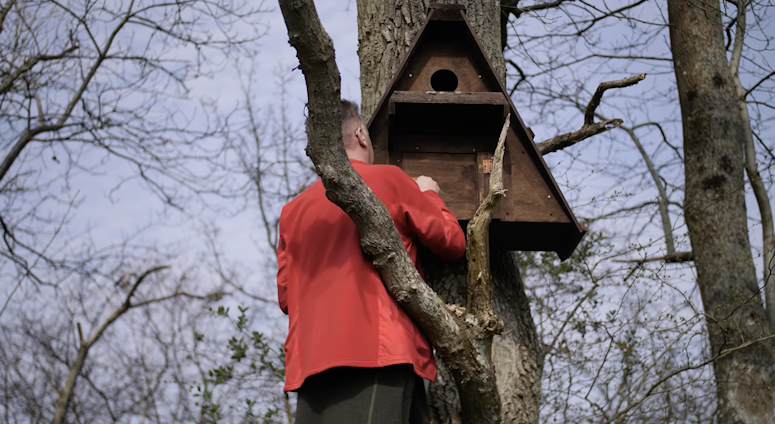
You've walked through the woodland, climbed the slope, steadied the pole camera, and now comes the question: will there be anything at all?
A tawny owl? A barn owl? Eggs? Or the dreaded big zero?
That was the challenge as the team headed into Bowyers Wood to check the owl boxes installed earlier this year, as part of ongoing efforts to support woodland wildlife.
Young woodland, old instincts
Unlike ancient woodland packed with hollowing veteran trees, Bowyers Wood is still relatively young. Much of it is made up of conifers, which means natural cavities, the kind tawny owls instinctively seek out when nesting, are in short supply.
That's where nest boxes come in.
Earlier in the season, Grace carried out acoustic monitoring, placing recorders throughout the woodland to listen for tawny owl calls and identify areas where active pairs might be holding territory. With promising signs of activity, boxes were carefully positioned to give breeding birds somewhere suitable to nest.
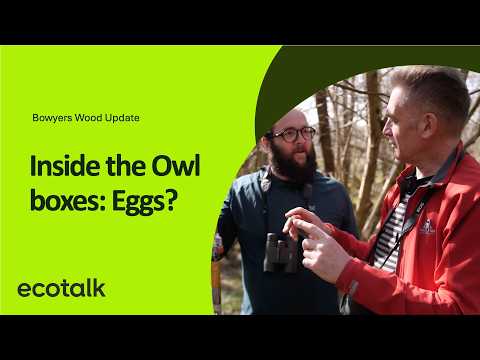
By this point in spring, any resident tawny owls could already be incubating eggs, and expectations were high as Chris Packham and Jimmy Hill made their way into the woods to investigate.
Box one: a quiet start
The first inspection? Empty.
No owl. No pellets. No obvious signs of activity, aside from a little nesting material tucked in the back that was more likely the work of a squirrel than an owl.
Disappointing? Perhaps. Disheartening? Not yet.
There were still more boxes to check.
Then everything changed
The second box told a completely different story.
A quick look through the inspection camera revealed something extraordinary: a tawny owl clutch of five eggs.
For experienced owl monitors, that number matters. A clutch of five is unusual, particularly this early in the season. In a good year, four eggs is already considered impressive, making five a remarkable sign that conditions may be favouring breeding birds this year.
Clean, healthy-looking eggs sat inside the box alongside a scattering of pellets, a strong indication that this wasn't simply a stopover. This looked very much like an active nest.
And that wasn't the end of the excitement.
In another box, a tawny owl herself briefly appeared on camera, a beautiful russet-brown bird peering back from the darkness before being quietly left to settle again in peace.
Two tawny owl successes from three boxes? Not a bad morning's work.
Why nest boxes are so important for British owls
Tawny owls naturally prefer cavities in mature trees, particularly old oaks. But in younger woodland, those opportunities are limited.
Nest boxes help bridge that gap. By creating safe nesting sites, the team can support species that might otherwise struggle to breed successfully in recovering habitats, and it's not just tawny owls that benefit.
Could barn owls be next?
One of the most intriguing stops of the day was a barn owl box installed earlier in the season.
Camera footage had already confirmed visits, including one on Valentine's Day, raising hopes that a breeding pair might settle in. The timing matters: recent reports suggest barn owl breeding numbers have suffered significantly following a difficult year, making habitat support more critical than ever.
No owls greeted the team this time, but pellets scattered across the floor of the box told their own story. And in the world of birds of prey, pellets are clues worth reading carefully.
What the evidence left behind can tell us
If you've never examined an owl pellet, think of it as nature's detective file.
Owls swallow much of their prey whole, later regurgitating the indigestible parts. Fur, bones and tiny skulls are compressed into neat parcels and expelled. Inside the box, the evidence pointed not only to owls, but to kestrels too.
Small vole skulls, jawbones and tufts of fur helped reveal who had been feeding there, whilst the structure of the pellets themselves offered further hints. Kestrel pellets tend to be drier and more crumbly; owl pellets are often smoother or fluffier, depending on the species.
In short: even an apparently empty box can tell an extraordinary story.
Will the eggs hatch? We'll be back to find out
The biggest question now is a simple one: will those five eggs hatch?
If all goes well, the next visit to Bowyers Wood could reveal something even more special. Keep an eye on the blog; we'll be back soon with the next chapter.