

Dam Good News
During one of the driest summers on record, the beavers of Bowyers Wood did exactly what they evolved to do.
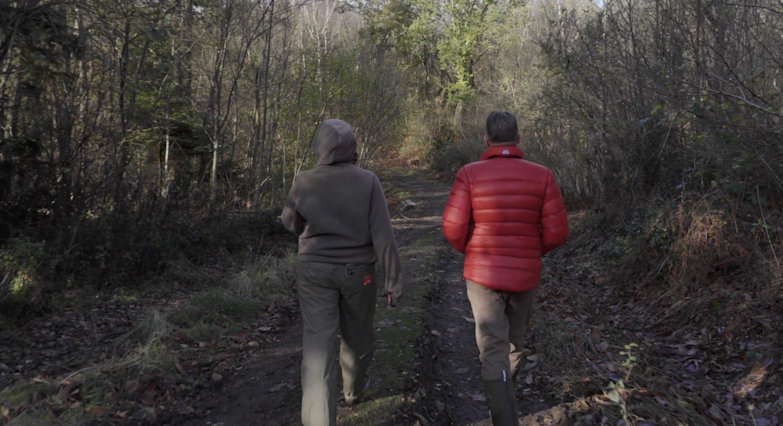
Winter sunshine can be deceptive.
A bright sky, cold air, damp logs and wet trousers.
The perfect conditions for a December site visit.
At Bowyers Wood, the team gathers for a seasonal update, wrapped in fleeces and thermals, taking stock of how the land is responding before its most transformative residents arrive. Beavers are expected in the coming months, and this winter is all about observation, patience and preparation.
Most importantly, it is about listening.
Boxes, recorders and quiet evidence
Bird boxes are now in place across the woodland. Some have open fronts for robins and wrens; others have smaller entrance holes to encourage a broader range of species. Metal plates protect the entrances, preventing squirrels and woodpeckers from undoing the good work.
Nearby, bioacoustic recorders are strapped to trees, positioned in a loose triangle across the site. These devices quietly capture the night sounds of the wood, recording tawny owls, passing geese, waders flying overhead at two in the morning, and countless other species that are present even when people are asleep.
It is the same principle as camera trapping, but for sound.
Another layer of understanding.
Another piece of the puzzle.
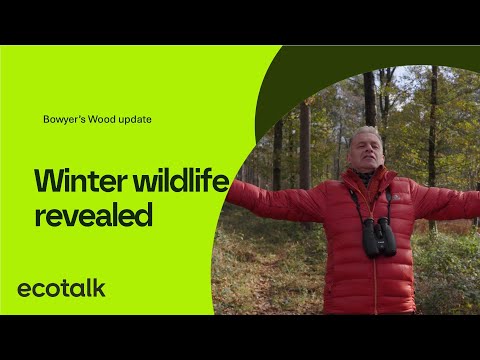
Chris Packham, Ecotalk’s Chief Ecologist, often emphasises how much wildlife goes unnoticed simply because it moves when humans are not around. These recorders help close that gap.
Water tells the truth
Down by the stream, the focus turns to water quality. This narrow watercourse will sit at the heart of the future beaver enclosure, and understanding its current condition is critical.
Recent rain has triggered an iron algae bloom, turning the water cloudy and coating stones and plants in rusty film. Visibility is poor, making surveys harder, but this is exactly why baseline monitoring matters.
Emma, wearing waders and carrying sampling nets, demonstrates kick sampling. The method is simple but precise. A standard three minutes of gently disturbing the riverbed upstream of the net, allowing anything dislodged to wash into the mesh. The timing is vital; consistency allows comparisons across sites and across years.
This is citizen science done properly.
The samples reveal freshwater shrimps, gammeras clinging together in pairs, and a small number of insect larvae. Caseless caddisfly larvae are suspected, but samples will be sent to the University of Sussex for confirmation.
Two species is not ideal.
Eight would indicate good river health.
But disappointment is not the point. This is the starting line.
“These surveys give meaning to improvement,” Chris explains. “Without knowing where you began, you cannot measure change.”
Before and after
The plan is simple and ambitious. Sampling will continue at the top, middle and bottom of the beaver enclosure, as well as upstream beyond the site boundary. This will allow the team to see what flows in, what changes on site, and what leaves downstream.
When beavers arrive, their dams and channels should slow water, trap sediment, increase oxygenation and allow vegetation to return. In time, insect diversity should rise, followed by fish, bats and birds.
The transformation will not be instant.
But it will be measurable.
Fixing flow, welcoming life
Elsewhere on site, a repaired culvert tells its own story. Once flooded, now flowing cleanly beneath the track, it includes a sluice to manage water levels and protect infrastructure once beavers begin their work.
Beaver fencing is nearly complete, with a slight delay pushing arrival to February. Even so, wildlife is already responding. A kingfisher has been spotted inside the enclosure, a flash of colour where trees and water meet.
It is a reminder that nature is often waiting, not absent.
What the cameras see
Back indoors, the mood lifts as camera trap footage plays across the screen.
Fallow deer move through the trees in daylight, still carrying faint spots on their rumps. Foxes appear next, healthy and confident, returning repeatedly to the same patch. Facial markings make it possible to identify individuals over time, building a picture of territory and behaviour.
A badger arrives later, cautious and deliberate, missing out on the food left earlier because of its wariness. Shyness, as Chris notes wryly, can cost opportunities in wildlife as much as in life.
Then there is the heron.
Captured hauling a large fish from the stream, its prey almost half the length of its neck. In such a small watercourse, this is significant. Perhaps a trout, moving upstream after rainfall to spawn, taking advantage of freshly flushed gravel.
It is a moment that speaks volumes about hidden abundance.
Other visitors spark debate. A sleek mustelid darts past the camera. Too fluffy-tailed for a stoat, not bushy enough for a pine marten, unlikely to be mink. The conclusion leans towards an escaped ferret or possibly a polecat. Native or not, its ecological role is clear; controlling small mammals, part of the wider balance.
Grey squirrels appear regularly. Dormice, despite best efforts, remain elusive. Chris explains why; their tree-bound lives, clumsy movement on the ground, and long hibernation make them notoriously hard to detect. Hair traps and chewed hazelnuts may yet reveal their presence, but winter is not the ideal season.
A year of foundations
Taken together, these moments form a quiet success story. No grand reveal, no sudden explosion of wildlife. Instead, steady signs of life, careful monitoring and thoughtful preparation.
“This year has been about laying foundations,” Chris reflects. “Next year is about acceleration.”
Beaver arrival will mark a turning point. Water will slow, habitats will diversify, and species numbers should rise. Owl boxes, raptor poles and wetlands are already in place, ready to respond.
For now, winter holds the site in pause.
Listening.
Recording.
Waiting.
This is how rewilding begins; not with spectacle, but with attention.